Wild Donkeys in Aruba
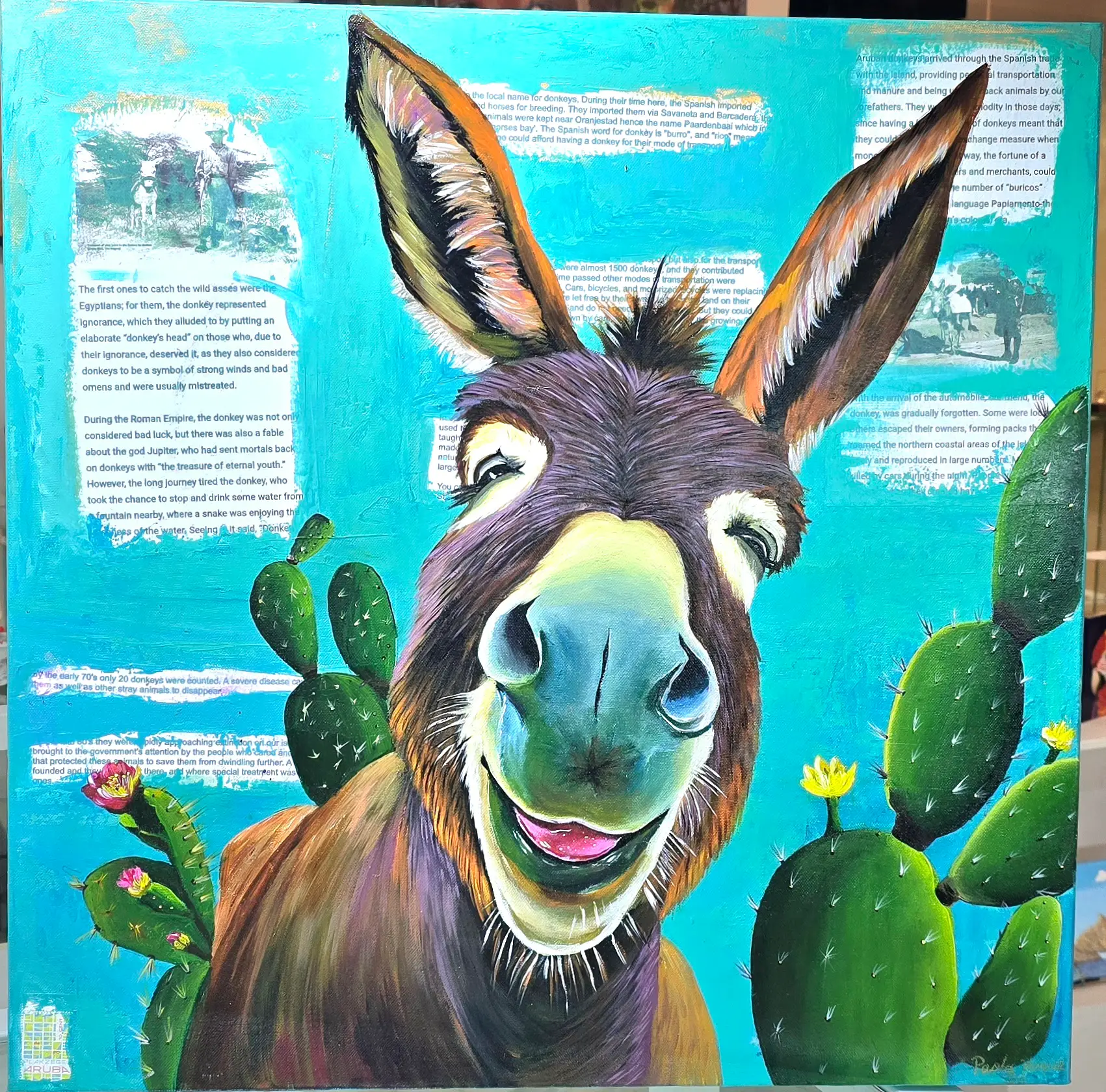
Burico is the local name for donkeys. During their time here, the Spanish imported donkeys and horses for breeding. They imported them via Savaneta and Barcadera, the four-legged animals were kept near Oranjestad hence the name Paardenbaai which in Dutch means ‘horses bay’. The Spanish word for donkey is “burro”, and “rico” means rich. Not everyone could afford having a donkey for their mode of transportation in those days.
The donkeys were relied upon not only for personal transport but also for the transport of goods. In the early days there were almost 1500 donkeys, and they contributed greatly to Aruba’s economy. As time passed other modes of transportation were replacing the buricos little by little. Cars, bicycles, and motorized bicycle were replacing them. The majority of donkeys were let free by their owner to roam the land on their own. Donkeys are strong by nature and do not need much to survive. But they could not survive diseases, being knocked down by cars or trucks and even by the growing society that saw them as pests.
By the early 70’s only 20 donkeys were counted. A severe disease caused many them as well as other stray animals to disappear.
By the late 80’s they were rapidly approaching extinction on our island. This was brought to the government’s attention by the people who cared and a law was drawn up that protected these animals to save them from dwindling further. A sanctuary was founded and they were kept there, and where special treatment was given to the weaker ones.
In early schooldays, when children did not pay attention or made bad grades, teachers used to scold a child as a “burico”. Nowadays that is not the case and children are being taught in school about the survival of the buricos, and the struggle of the ones who made it possible for the donkeys to populate a total of 80 to 100 who roam free in their natural habitat. They are often found in groups of 2 to 16 animals. Donkeys are the largest “wild animals” in Aruba, and are no problem at all.
60 × 60 × 3 cm · Canvas / panel · Unique work